b/w16mm, Super8+Col Digital (DCP, Sound 5.1 Cinema) 41min, September 2026, AHRC Funding
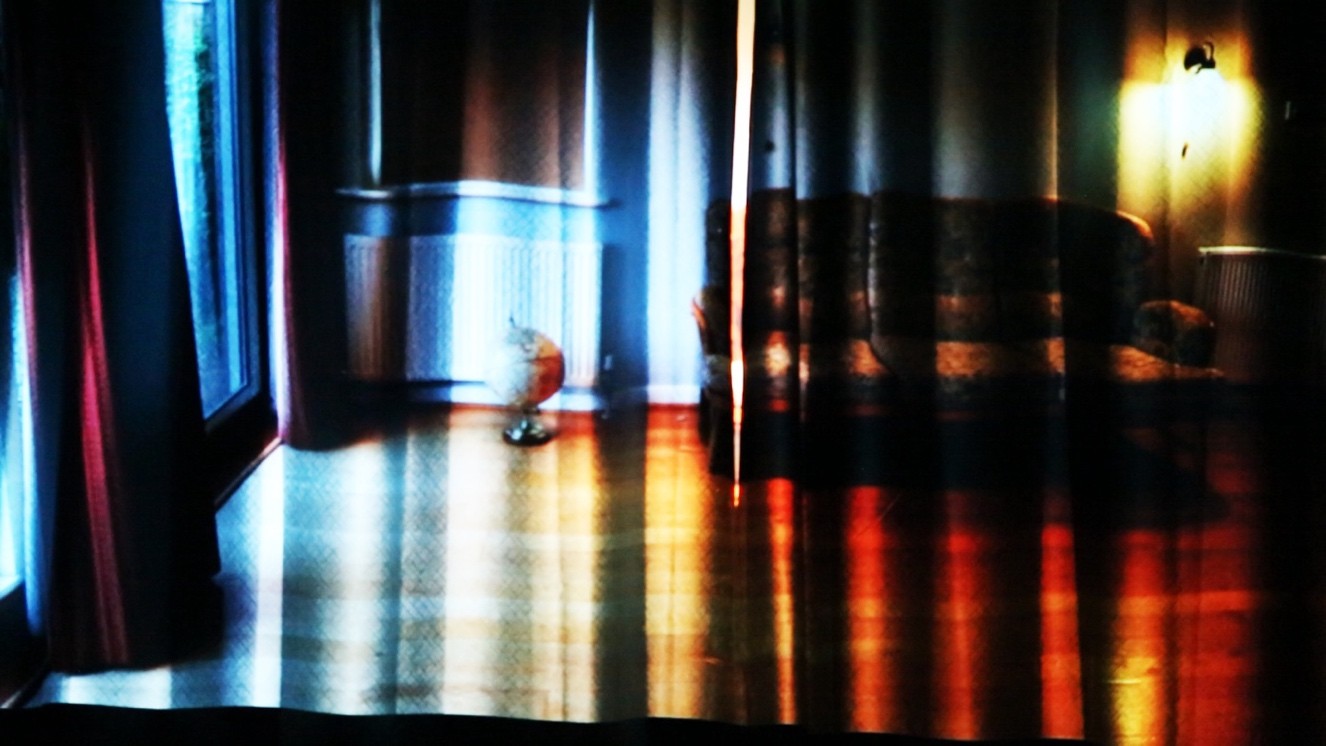
In This Room returns to conversations and images Sarah Pucill made with her mother in Taking My Skin (35 min, 2006), revisiting them in the light of a family secret told years later. What was seen, heard and understood at the time is altered by this later knowledge, as past and present are brought into an apparent simultaneity.
The bounded space of the family living room holds together different moments: her mother’s death, the film they made together fifteen years earlier, difficult childhood memories and the subsequent revelation of a parental secret. Red roses that had lain on her mother’s coffin slowly wither and dry. This colour footage is interwoven with outtakes and a sequence from the black-and-white celluloid Taking My Skin, in which mother and daughter film one another in the room and beside the river. Their earlier conversation acquires a different resonance retrospectively, revealing the spaces between what could be spoken, and what for the filmmaker remained hidden.
Returning to earlier images has a lineage across Pucill’s filmmaking, from her encounters with Claude Cahun’s photographs and writing in Magic Mirror (2013) and Confessions to the Mirror (2016), to the restaging of her own work in Double Exposure (2023). Here, that revisiting becomes acutely personal: the image becomes a witness, carrying meanings that the filmmaker was unaware of when it was made.
Marking a new turn in her filmmaking, a rhythmic voice-over and piano composition, both by Pucill, interlace camera and voice. At the film’s centre is the mother–daughter relationship, and the possibility that images can hold what could not be spoken, becoming acts of recognition and witness.
- Camera, Appearance and Dialogue:
- Jane and Sarah Pucill
- Voice-over:
- Sarah Pucill
- Music Composition, Piano and Vocal:
- Sarah Pucill
- Image+Sound Edit:
- Sarah Pucill
- Sound Mix:
- Tom Haines, BrainAudio
- Colour Grade:
- Fraser Watson
- Written and Directed:
- Sarah Pucill
Directors’ Statement In This Room 2026. Sarah Pucill
In This Room revisits Taking My Skin (2006), a film I made with my mother twenty years ago. My understanding of the film changed after my mother shared a family secret with me a few years before she died. In This Room explores this collision between what was understood then and what can be understood now: how denial operates, how the gaps between what is conscious and what is unconscious remain unclear and what kinds of damage can arise from patriarchal silencing of women.
At the centre of the film is the intersubjective relationship between my mother and myself. It exist in the earlier footage and in my act of returning to it after her death through our spoken dialogue, and through the cinematography that at the same time explores something of split subjectivity. The film was influenced by the writer Rachel Cusk’s writing on autobiography and her insistence that writing from lived experience need not be understood as simple ‘subjective’, rather, personal experience can require intense objectivity, in which individual experience is understood in relation to larger structured. This resonated with my own attempt to consider the institution of the family, and at the roles and silencing of women within it, as both personal experience and social and political history.
The collision between past and present is reflected in the film’ structure. Black-and-white celluloid footage, both outtakes and sequences from Taking My Skin, carries the dialogue with my mother then, and is interwoven with colour footage of red roses that had lain on her coffin. As the flowers slowly die and dry, my voice-over narrates my mother’s secret and moves backwards through time: from her death, to the making of Taking My Skin, and further back to events from my childhood. These different moments are connected by the family living room in which they took place.
I wanted to create a space in which documentation and analysis could sit alongside the expressive and imaginative; where memory as thought and feeling might be restaged and reimagined through spoken word, image and music. This is created in part within the interweaving of the earlier b+w film with the colour scenes of the roses. The veils of denial as image and concept appear intermittently throughout the film. In a key final sequence, they are at the centre of the scene, where rhythms between voice, piano and image are threaded together. This scene is also isolated from other moments in the film because there are no hints of explanation. Instead, the viewer is placed in the position of the child’s experience of bewildered incomprehension. This movement between analytical reflection and emotional expression offers a counterpoint to much of what is painful to hear but it also draws upon the different parts of who we are. The films fractured structure between documentation and reflection with the expressive memories and fantasies gives voice to states of bewilderment and shock that emerge in moments when understanding what reality is can be both unfathomable and critical.